Description
You don’t need to be a genius with money. You need to start early, and you need a plan.
Most young Australians are drowning in financial noise. Podcasts, TikTok tips, conflicting advice from every direction, and none of it tells you what to actually do first. So most people do nothing, and every year of doing nothing is a year of compounding you can never get back.
Here’s the part nobody tells you: the earlier you start, the less effort it takes to end up wealthy. It isn’t about how much you earn. It’s about starting the clock early and letting time do the heavy lifting.
Noel Whittaker puts it this way.
Consider two 15 year olds, Kerry and Alex. Kerry starts investing $2,000 a year straight away, and keeps it up until age 30, when she stops to buy a house. Alex waits until 30 to start, then invests $2,000 a year without fail all the way through to 65.
At a 9% return, who ends up better off? Kerry, and it isn’t close. She invested a total of just $30,000 and finished with $1.2 million. Alex put in more than double that, $70,000 in total, and ended up with only $430,000. Kerry won by starting fifteen years earlier and then stopping. That’s the entire point of this book.
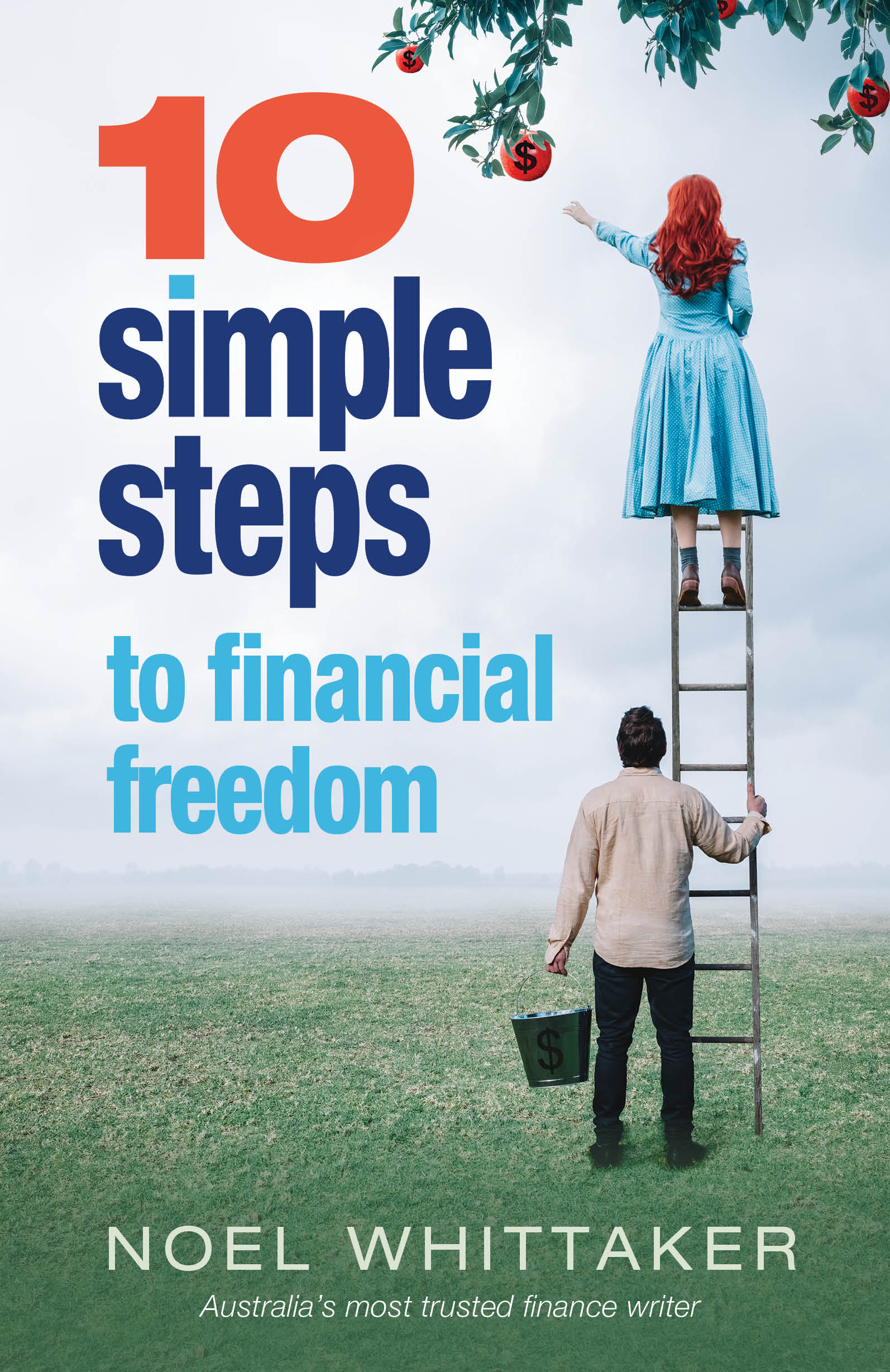
10 Simple Steps to Financial Freedom takes everything that actually matters about building wealth in your twenties, thirties and forties, and strips it down to ten steps you can start today. No jargon, no 400 page textbook, no overwhelm. Just the strategy, laid out plainly by someone who has spent a lifetime watching what works and what doesn’t.
Inside, you’ll learn:
- The one simple strategy that puts you in the top 20% of wealth builders, immediately
- How to use the miracle of compounding to turbocharge your savings
- What your financial enemies really are, and how to fight them off
- The difference between good debt and bad debt, and why confusing the two is costly
- How setting real goals changes what you actually do with your money
- The secrets of successful investing, without needing to become an expert
If you’re under 40, you’re sitting on a gold mine. You just need to pick up the shovel.
It’s time to change your thinking from “easy come, easy go” to “easy come, easy grow.”