

“In God we trust. Everyone else bring data.”
W. EDWARDS DEMING
The Making Money Made Simple Podcast
Renowned broadcaster John Deeks and I discuss all the big topics covered in this newsletter in detail each month.

Welcome to our November Newsletter
It’s been another challenging year, and my focus today is the housing market — I fear we’re sailing into dangerous waters.
Let’s start with interest rates. The Reserve Bank has spoken and, as widely predicted, rates are on hold — at least for now. But the big question is: where to next? I’m one of 32 so-called experts asked each month to forecast what the Reserve Bank will do at its upcoming meeting, and my forecast for this week was no change. I guess I’ve got a different way of thinking to many of my cohorts. I don’t sit in an office studying graphs — I get out and talk to people.
Every employer I speak to, no matter what field they’re in, tells me the same thing: they can’t get staff. It’s especially bad in the building trade, where costs are going through the roof. According to Master Builders Australia, we’re short more than 200,000 tradies — and that gap won’t close any time soon.

Think about the Reserve Bank’s job. If the country is in trouble and needs stimulus, they’ll cut rates. If inflation is booming, they’ll hike them to try to slow things down. I don’t see any rate increases coming — not in the near term. But with things the way they are, there’s no way they’ll be cutting either. In fact, I’ll go so far as to say we may be at the bottom of the rate cycle, which means that last month’s cut may have been the last cut we’ll see for a long time.
Keeping in mind that house prices depend on supply and demand — and that supply is extremely limited — it’s obvious that demand is where we should be directing our thoughts. And it’s not good.
Adding fuel to the fire is the stimulus in the housing market created by the government’s first home buyer scheme, which allows people to buy with as little as a five per cent deposit and no mortgage insurance. It’s well-intentioned, but it’s adding even more heat to an already overheated market. Every new incentive aimed at helping people into housing ends up increasing demand, which simply pushes prices higher.

Image by pch.vector on Freepik
Now think about the lenders.
But there’s more to this dangerous mix — and think about what’s happening now in the lending area.
The banks are going gung-ho to lure borrowers directly to them and sidestep the mortgage-broking industry, keeping more of the profits for themselves. Commonwealth Bank has been advertising up to 300,000 Qantas Frequent Flyer points for new loans — enough to fly business class to Europe — and recently announced it’s prepared to offer extra borrowing capacity, up to $40,000 more, for applicants willing to rent out a room in their home to boost income. It’s clever marketing, but borrowers need to look past the shiny bonuses and ask whether the deal is really in their best interest.
Forty-year loans
At the same time, lending standards are slipping as competition intensifies. Great Southern Bank has joined non-bank lenders such as Pepper Money in offering 40-year mortgages. Extending a home loan from 30 to 40 years can make repayments look more manageable, but the cost is brutal. On an $800,000 loan at 5.5%, the monthly repayment is about $4,542 over 30 years (interest roughly $835,000) versus about $4,126 over 40 years (interest roughly $1.18 million). That’s around $345,000 extra interest for saving only $416 a month — and it risks people still paying the mortgage in their sixties or seventies, just when they should be thinking about retirement.
Ten-year interest-only loans.
Even more concerning is AMP Bank’s new 10-year interest-only loan, which requires no reassessment of the borrower’s financial position during that period. It means borrowers can spend a decade paying only interest, building no equity and facing a sharp increase in repayments when principal payments begin. Without a mid-term review, there’s also no check on whether the property has held its value or the borrower can still afford to service the debt.
 Image by vectorjuice on Freepik
The warnings are coming.
These products may make it easier to qualify for a loan, but they’re a step back from the more disciplined standards regulators fought hard to enforce. APRA has repeatedly warned lenders not to chase growth at the expense of prudence. It has long identified high loan-to-income ratios, extended terms, and lengthy interest-only periods as major red flags. The regulator insists banks maintain a serviceability buffer of at least three percentage points above the actual loan rate, to ensure borrowers can handle higher repayments, and it requires lenders to hold extra capital against riskier loans. The message from APRA is crystal clear: competition must not come at the expense of sound lending.
All this tells me we’re heading into choppy waters. The housing market is fuelled by emotion, and when confidence is high, people tend to take bigger risks. But history reminds us that easy money and loose lending standards always end the same way. If you’re thinking about buying or refinancing, take the time to run the numbers carefully — and don’t let bonus points or clever marketing cloud your judgment. As I’ve said many times before, wealth is built by keeping things simple and avoiding costly mistakes.
For borrowers, the lesson is equally clear. Don’t be seduced by offers of frequent-flyer points, small monthly repayments, or flashy new mortgage products. Always look at the total interest you’ll pay over the life of the loan, and think carefully about how long you want to stay in debt. The banks may be relaxing their standards — but you shouldn’t relax yours.
Noel’s Next Event
I’m excited to tell you about our event next month at the beautiful RACV Country Club in Healesville. It’s a stunning town — the gateway to the Yarra Valley — and we’re privileged to be hosting a fireside chat at the club, just a short drive from the town centre. Numbers are strictly limited to 60, so it’ll be first in, first served — so book early. I’m really looking forward to seeing many of you there.
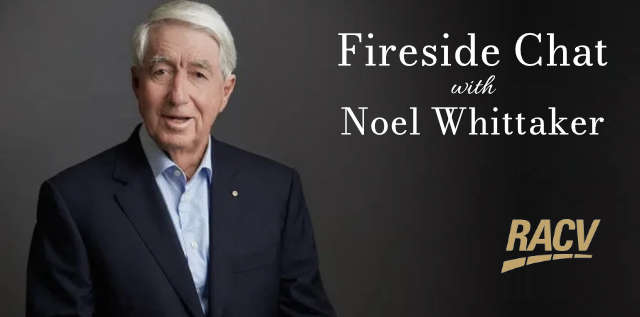
Join our Fireside Chat with Noel Whittaker, best-selling author and leading finance expert, sharing insights as one of Australia’s foremost voices on money and investment.
Ticket includes talk with Q&A, canapes and a welcome drink. Additional beverages available at bar prices.
WHEN
Saturday 6 December | 1pm – 2:30pm
WHERE
RACV Club Healesville Country Club &
Resort, 122 Healesville-Kinglake Road
ROOM
Members Lounge
PRICE
$50 per person (payment taken on day)
RSVP via email to
clubevents@racv.com.au
Seminar in Townsville
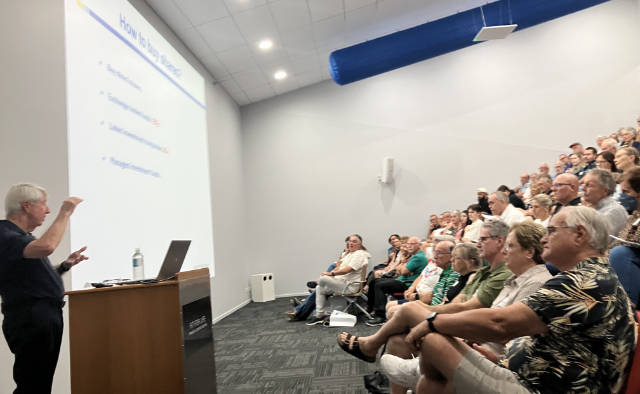
I had a wonderful evening in Townsville last week, giving a seminar to the clients of My Fortress — Townsville’s leading financial planning service. They’re a fully integrated firm covering financial planning, accounting, tax, and mortgage broking, and I’ve been doing an annual seminar for them for many years.
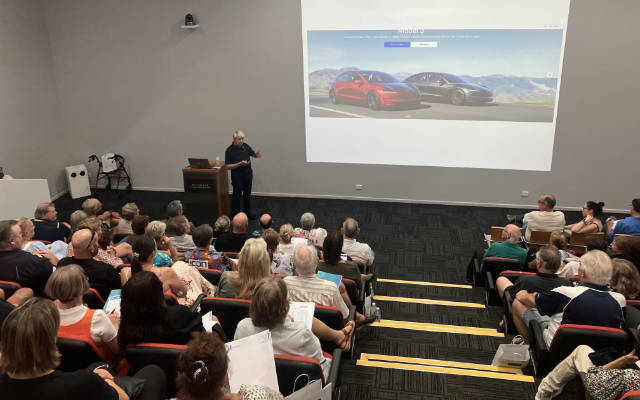
It was great to see so many familiar faces, and especially gratifying to have people come up afterwards to shake my hand and tell me how my books had changed their lives.
Getting How much should I borrow right advice
Recently I was talking to a tradie who told me that three years ago he bought a place for $330,000 in a fairly ordinary suburb, and that property is now worth $990,000 – which makes him a millionaire. His is probably not a unique experience; anecdotal evidence tells me that in the lower price brackets property values have at least doubled in the past three to five years. Does that mean everybody’s rates are about to double too, in line with the soaring neighbourhood values? And if so, what will that do to people’s already stretched budgets?
 Image by Drazen Zijic on Freepik
To get an idea of the challenges facing young home buyers, I asked a mortgage broker about the criteria needed to get approval for a $931,000 loan to buy a $980,000 first home with a $49,000 deposit under the government’s new scheme. The broker told me that the first hurdle is called the serviceability test: lenders must prove that the borrower could afford the loan even if interest rates rose by three per cent.
This is where a curious little measure comes in: the Household Expenditure Measure, or HEM. It’s a benchmark based on surveys of what people spend on essentials like food, transport, and clothing. The bank uses it to estimate how much a household needs to live on – and then subtracts the HEM from income to see what’s left for mortgage repayments.
Here’s the strange part. For a couple in their thirties earning $95,000 each – a combined income of $190,000 – the HEM figure used by most lenders is around $3,500 a month, or just over $40,000 a year. It’s called the “floor” for living expenses. If the applicants claim to live on less, the bank simply substitutes the HEM number for the serviceability test instead.
Yet the Association of Superannuation Funds of Australia tells us that a retired couple needs about $75,000 a year to live comfortably. In other words, the banks believe two working people in their thirties can get by on almost half of what two retirees require to live decently. It’s an extraordinary contrast – and one that exposes the gulf between theory and reality.
Of course, the difference comes down to purpose. The ASFA Retirement Standard aims to describe a comfortable lifestyle, including travel, dining out, and health insurance. The HEM, however, covers survival. It’s the bare minimum a household could live on without real hardship, used so lenders don’t let borrowers overextend themselves.
Still, the result is absurd. A young couple trying to enter the market face a lender who says, “We’ll assume you spend $40,000 a year and can therefore afford huge repayments.” The working couple may technically pass the test, but in the real world their household bills, insurances, and groceries are almost certain to push well beyond the HEM’s conservative benchmark. It’s little wonder so many borrowers feel they’re skating on thin ice. The banks’ formulas may protect the system, but they don’t reflect how people actually live. Meanwhile, a retired couple is told they’ll need $75,000 a year to enjoy a reasonable life.
 Image by wayhomestudio on Freepik
And that’s why it’s so important to do a detailed budget before buying a home. Don’t rely on what the bank’s calculator says you can afford – work out your own figures honestly by tracking your spending. For your post-purchase budget, include the hidden costs of ownership such as rates, insurance, and maintenance, and make sure there’s a buffer for interest-rate rises. A home loan is a long-term commitment, and the best defence against sleepless nights is a realistic budget built around the way you actually live.
The worst part of the housing affordability crisis is that it’s turbocharging the gap between the haves and the have-nots. The Bank of Mum and Dad is now one of Australia’s biggest lenders. But these resources are not available to everyone.
The rental pool is shrinking.
Meanwhile, the pool of rental properties is shrinking. I’m getting frequent emails from investors who say they’re sick of being landlords, worn down by mounting government charges, regulations, and hassles. More and more investment properties are coming on the market and being snapped up by first home buyers. Obviously this will exacerbate the present rental shortage, pushing up rents even further and making it even harder for ordinary young people to save for a house deposit and buy their own home.
Banks behaving badly
I was astounded to read in this month’s Choice magazine about a shopper who bought a $475 Woolworths gift card with their Commonwealth Bank credit card — and was slugged a cash advance fee of $14.25 because the bank reckons buying a gift card is the same as withdrawing cash.

Cash advances usually attract high interest because the bank assumes you’re taking cash, but calling a gift-card purchase a cash advance is absurd. CBA told Choice they charge a $4 or 3% fee on any cash advance over $300 — and even if your account is in credit, you’ll still pay $4. That’s like being fined for spending your own money.
I use ING and Wise debit cards, and neither charges me to access my own funds. But the hits keep coming — St George Bank has just updated its terms, and now it’ll cost $1 just to speak to a staff member. At this rate, they’ll soon be charging a “breathing fee” when you walk into a branch.
From the Mailbox
A Note From a Long-Time Investor
“I’ve been a property investor for 23 years, and I’ve just sold the very first property I ever bought. Frankly, I’ve had enough. The taxes, insurance, rates, and endless tenant hassles have made it way too hard to own rentals.
 Image by fabrikasimf on Freepik
It sold to a single lady who’ll live in it herself — so the rental crisis just got a bit worse. I’ve still got four more to sell, and I’m over the BS. Don’t get me wrong, property’s been great for me, but now that I’m retired and don’t need negative gearing, the return just isn’t worth the grief. ETFs look a much easier way to get growth and income — no tenants, no drama.
I suspect many readers feel exactly the same way. Have you made the same move out of property? I’d love to hear from you.”
Back down on the super tax
Two years ago, Treasurer Jim Chalmers unveiled what became one of the most controversial superannuation proposals in history — a new tax on members with balances above $3 million.
The problem was that the calculation included unrealised gains — paper increases in asset values that hadn’t been sold. In other words, people could have been taxed on profits that didn’t exist. Worse, the $3 million threshold wasn’t indexed, so as inflation lifted balances, more Australians would have been dragged into the net.
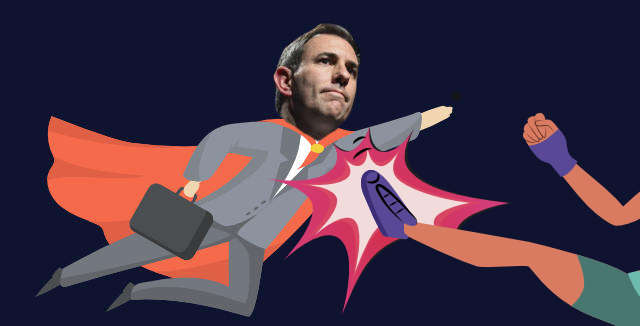
The plan sparked a political storm. Critics warned it set a dangerous precedent — if unrealised gains could be taxed inside super, what might come next? Opposition came from all quarters, including Labor heavyweights Paul Keating and Bill Kelty, and the pressure soon reached the Prime Minister himself.
That pressure worked. On Monday, Chalmers announced major changes. The tax will now apply only to realised earnings— actual income such as interest, dividends, rent, and capital gains from sold assets.
For those with balances above $3 million, the ATO will determine each person’s share of these realised earnings and apply a 15 per cent rate on balances between $3 million and $10 million, and 25 per cent above $10 million. Both thresholds will be indexed to the CPI. These new rates are in addition to the standard 15 per cent tax on fund earnings.
Many headlines wrongly claimed this meant a 30 or 40 per cent tax. In reality, a member with $4 million would have only one-quarter of their fund affected, and only 25 per cent of the earnings on that portion taxed at the higher rate.
The rationale is that large balances should contribute more — but the logic is weak. Those with multimillion-dollar accounts built them under generous rules that existed years ago. Today’s strict contribution caps make it almost impossible to reach that level.
Non-concessional contributions are now limited to $120,000 a year, and once your balance hits $2 million you can’t add more. High-income earners pay 30 per cent contributions tax, meaning the $30,000 they can claim as a deduction effectively drops to $21,000.
Most people with large balances are now in their seventies or eighties. Given that only around $2 million can be left to a beneficiary, major withdrawals are inevitable as these members pass on — forcing super funds to sell assets and pay capital gains tax.
I don’t accept Treasurer Chalmers’ claim that the change will raise $4 billion. The original plan would simply have brought forward tax that will be paid naturally as those assets are sold.
If your balance is below $3 million, you won’t be affected. But if it’s above that level — or close — talk to your adviser well before June 2026. For self-managed funds, it may be worth realising some assets this financial year to take advantage of lower capital gains tax rates.
Retirement made simple
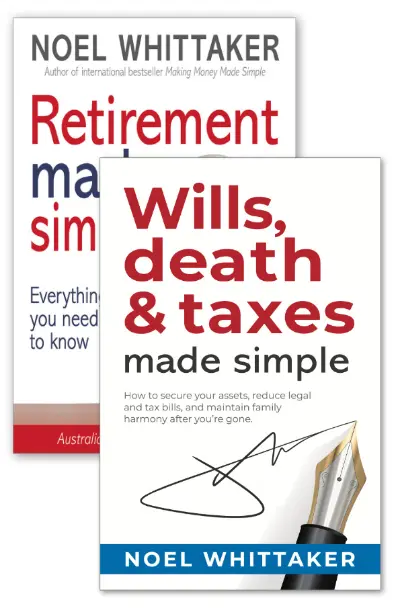
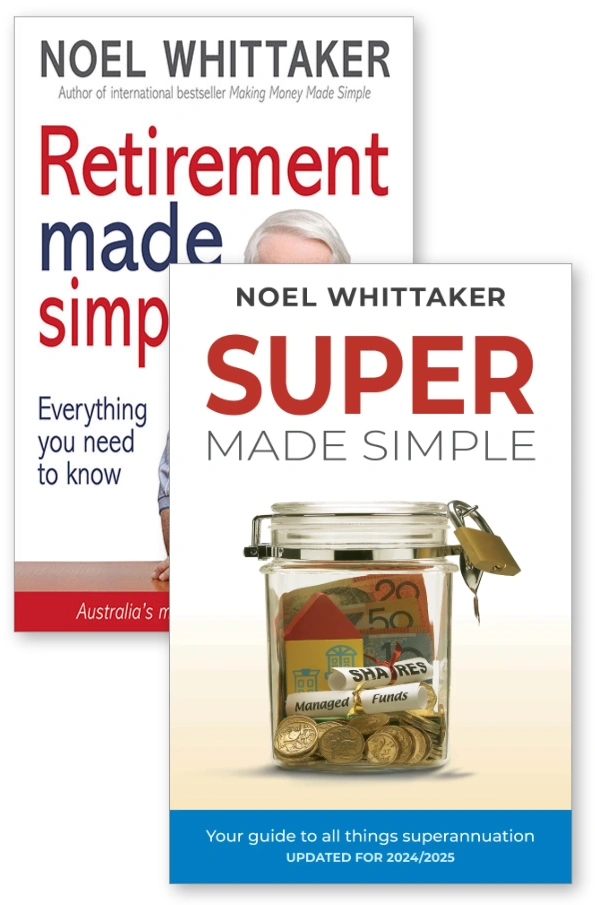
As life keeps changing, so must our knowledge. Don’t forget there is now a brand new a brand-new edition of Retirement Made Simple — updated with all the latest superannuation thresholds and rules that took effect on 30 June 2025. It’s available now from my website, and as always, the best value is in the bundle deals—because we pay the postage when you buy more than one.
Grab a Bundle & Save!
FREE SHIPPING ON ORDERS OVER $35 IN AUSTRALIA

And finally

ATTORNEY: Are you sexually active?
WITNESS: No, I just lie there.
__________________________________________________________
ATTORNEY: What gear were you in at the moment of the impact?
WITNESS: Gucci sweats and Reeboks.
__________________________________________________________
ATTORNEY: This myasthenia gravis, does it affect your memory at all?
WITNESS: Yes.
ATTORNEY: And in what ways does it affect your memory?
WITNESS: I forget.
ATTORNEY: You forget? Can you give us an example of something you forgot?
__________________________________________________________
ATTORNEY: What was the first thing your husband said to you that morning?
WITNESS: He said, ‘Where am I, Cathy?’
ATTORNEY: And why did that upset you?
WITNESS: My name is Susan!
__________________________________________________________
ATTORNEY: Do you know if your daughter has ever been involved in voodoo?
WITNESS: We both do.
ATTORNEY: Voodoo?
WITNESS: We do.
ATTORNEY: You do?
WITNESS: Yes, voodoo.
__________________________________________________________
ATTORNEY: Now doctor, isn’t it true that when a person dies in his sleep, he doesn’t know about it until the next morning?
WITNESS: Did you actually pass the bar exam?
__________________________________________________________
ATTORNEY: The youngest son, the twenty-year-old, how old is he?
WITNESS: Uh, he’s twenty.
__________________________________________________________
ATTORNEY: Were you present when your picture was taken?
WITNESS: Are you kidding me?
__________________________________________________________
ATTORNEY: So the date of conception (of the baby) was August 8th?
WITNESS: Yes.
ATTORNEY: And what were you doing at that time?
WITNESS: Uh…. I was gettin’ laid!
__________________________________________________________
ATTORNEY: She had three children, right?
WITNESS: Yes.
ATTORNEY: How many were boys?
WITNESS: None.
ATTORNEY: Were there any girls?
WITNESS: Are you kidding me? Your Honour, I think I need a different attorney. Can I get a new attorney?
__________________________________________________________
ATTORNEY: How was your first marriage terminated?
WITNESS: By death.
ATTORNEY: And by whose death was it terminated?
WITNESS: Now whose death do you suppose terminated it? __________________________________________________________
ATTORNEY: Can you describe the individual?
WITNESS: He was about medium height and had a beard.
ATTORNEY: Was this a male or a female?
WITNESS: Guess.
__________________________________________________________
ATTORNEY: Is your appearance here this morning pursuant to a deposition notice which I sent to your attorney?
WITNESS: No, this is how I dress when I go to work.
__________________________________________________________
ATTORNEY: Doctor, how many of your autopsies have you performed on dead people?
WITNESS: All my autopsies are performed on dead people. Would you like to rephrase that?
_________________________________________________________
ATTORNEY: ALL your responses MUST be oral, OK? What school did you go to?
WITNESS: Oral.
_________________________________________________________
ATTORNEY: Do you recall the time that you examined the body?
WITNESS: The autopsy started around 8:30 p.m.
ATTORNEY: And Mr. Denton was dead at the time?
WITNESS: No, he was sitting on the table wondering why I was doing an autopsy on him!
_________________________________________________________
ATTORNEY: Are you qualified to give a urine sample?
WITNESS: Huh….are you qualified to ask that question?
_________________________________________________________
And the best for last:
ATTORNEY: Doctor, before you performed the autopsy, did you check for a pulse?
WITNESS: No.
ATTORNEY: Did you check for blood pressure?
WITNESS: No.
ATTORNEY: Did you check for breathing?
WITNESS: No.
ATTORNEY: So, then it is possible that the patient was alive when you began the autopsy?
WITNESS: No.
ATTORNEY: How can you be so sure, Doctor?
WITNESS: Because his brain was sitting on my desk in a jar.
ATTORNEY: I see, but could the patient have still been alive, nevertheless?
WITNESS: Yes, it is possible that he could have been alive and practicing law.
 I hope you have enjoyed the latest edition of Noel News.
Thanks for all your kind comments. Please continue to send feedback through; it’s always appreciated and helps us to improve the newsletter.
And don’t forget you’ll get more regular communications from me if you follow me on X – @NoelWhittaker.
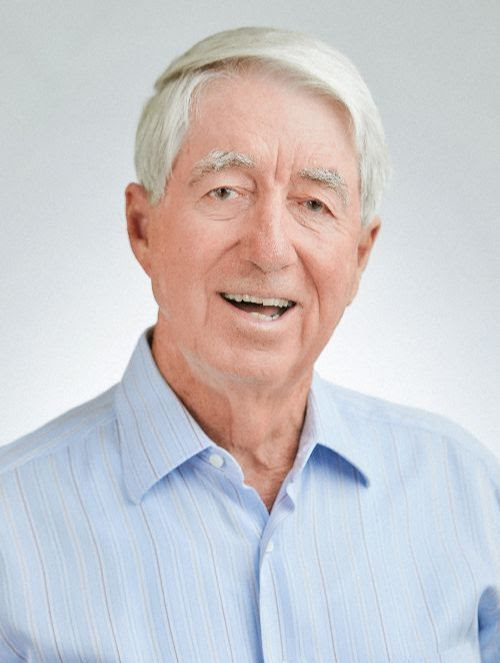
Noel Whittaker